
Posted by Defense Distributors on Sep 25th 2026
Baofeng UV-5RM Review: Is the Rugged Upgrade Worth the Money?
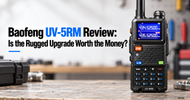
The UV-5RM exists for one reason: people kept buying UV-5R-class radios, then immediately spending time and money trying to make them harder to break and easier to use. If you are deciding between another low-cost baseline radio and the “rugged” variant, the only question that matters is whether the changes reduce failure and friction in your normal use. This review is about that practical difference, not box specs.
Most buyers are not comparing this radio to a $700 commercial handheld. They are comparing it to whatever is already in their kit, usually a UV-5R or BF-F8HP, and asking if the upgrade is worth paying for twice. That means we need to look at controls under stress, audio in bad environments, programming speed, and how much accessory work is still required after purchase.
What Actually Changed From a UV-5R-Class Radio
The UV-5RM keeps the same basic mission: inexpensive dual-band handheld comms for short-range team use, training, and general backup communications. The meaningful change is not that it suddenly becomes a different category of radio. The change is that the package is less fragile in common handling, with fewer immediate pain points around power and daily carry.
That distinction matters. A tougher shell and better button feel do not extend legal transmit privileges, fix poor frequency coordination, or replace a bad antenna setup. You still need a frequency plan, a repeatable channel layout, and clear net procedures if you expect useful performance from any handheld radio.
If your current UV-5R works and rarely leaves the range bag, the value case is weak. If your radio gets clipped, dropped, run in weather, and used weekly, better mechanical durability and cleaner ergonomics can absolutely be worth the upgrade cost even before you touch accessories.

Durability, Controls, and Day-to-Day Handling
The first practical win on a ruggedized handheld is control confidence. On older budget radios, the failure mode is often not catastrophic breakage, it is a sloppy knob, inconsistent side button feel, or a battery latch that starts feeling suspect after routine removal cycles. Those issues cost time during setup and create doubt during movement.
The UV-5RM form factor and external hardware are aimed at exactly that problem set. You get a radio that is still lightweight and compact enough for chest rig, belt, or pack use, but feels less temporary when manipulated repeatedly. If you have ever looked down to confirm whether the volume changed because the detents were vague, you understand the value here immediately.
None of this means you can ignore retention. A handheld on a loose clip is still a dropped handheld. A basic protective setup with a radio case and managed cable routing remains part of the system, whether you run this radio for classes, hunting property comms, or vehicle movement drills.
Audio Performance and Real-World Range Expectations
Audio clarity on budget handhelds is usually limited by environment and accessories more than by headline radio model. In open terrain with line of sight, most dual-band handhelds perform acceptably for local coordination. In buildings, tree lines, and rolling terrain, your range result is mostly about antenna efficiency, placement on body, and whether users are transmitting from behind dense obstructions.
That means you should evaluate the UV-5RM as a platform, not as magic RF. Expect familiar handheld behavior: solid local comms when line of sight is reasonable, and rapid degradation when terrain blocks you. If you need predictable longer-distance coverage, your real solution is repeater usage or moving to a different system architecture, not shopping one more budget handheld variant.
Where the UV-5RM helps is reducing operator-caused friction while you work inside those RF limits. Better handling and predictable controls keep users focused on net discipline instead of fighting the device. That alone can make team traffic cleaner, especially with less experienced radio users.
Programming Workflow Is Still the Make-or-Break Factor
If you buy this radio and only use front-panel programming, the upgrade will feel smaller than it should. Fast, repeatable setup comes from cable programming with a saved channel plan and documented naming conventions. The time savings are immediate once you are maintaining more than one radio or changing repeater sets for different areas.
Use a dedicated Baofeng Programming Cable and keep one known-good profile per use case: local simplex, travel repeater set, and training channels. Clone, verify, and label radios before you need them. You will avoid most “my radio is weird” troubleshooting that appears during classes and group shoots.

After programming, validate every critical channel with a short check procedure: confirm RX tone behavior, key up into a known receiver, verify power level, and check lock settings. Do this once at setup, then again after any profile edit. Five minutes of verification beats discovering a bad channel map when you are already in the field.
Antenna and Power Upgrades Usually Matter More Than Radio Hype
The default antenna on many budget radios is serviceable, not optimal. If your use includes wooded property, rural roads, or structures that force bad body positioning, antenna choice often changes outcomes more than moving between closely related radio models. This is where accessory spending can be rational instead of random.
A practical step is an Extended Flexible Antenna for Baofeng Radios when you need better handheld performance without committing to a fixed external setup. It is not a guarantee of dramatic range gains in every terrain type, but it can improve consistency enough to reduce broken transmissions at the margin where most team traffic fails.

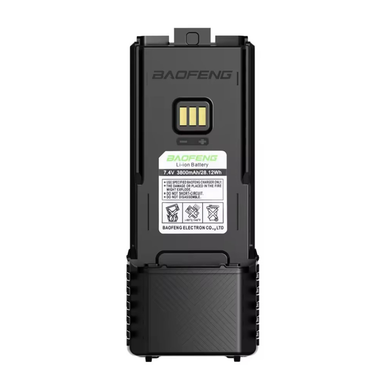
Power planning is the other recurring failure point. A “good radio” with inconsistent charging discipline is still a dead radio at the wrong time. Carrying a spare battery and using a predictable charge cycle is usually a better investment than buying another handset because one went flat during a long range day.
If your schedule includes long sessions away from wall power, a Baofeng Extended UV-5RM UV-5RH Battery is the straightforward answer. It solves runtime margin directly and lets you keep transmit discipline without constantly checking your battery icon.
So, Is the Rugged Upgrade Worth It?
For occasional users with a working UV-5R and no reliability complaints, probably not. Keep your current radio, program it correctly, and spend on antenna and battery improvements first. That path usually delivers more practical value per dollar than replacing a functioning handheld.
For users who run radios regularly and are tired of minor hardware annoyances, the UV-5RM makes a stronger case. Better handling, a more confidence-inspiring build, and the same familiar ecosystem can save daily friction even if raw RF behavior remains in the same class. It is an incremental upgrade, but a useful one when your radio is a routine tool instead of a drawer backup.
If you move forward, do it as a system purchase, not a single-box purchase. Build a channel plan, program with a cable, validate channels, choose an antenna for your terrain, and set a battery rotation schedule. That is how you actually get reliable comms performance from this platform, and that is what makes the upgrade money count.