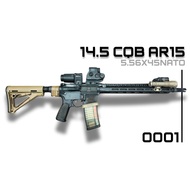
BCM 14.5 CQB Build

Dec 5th 2025

BCM 14.5 CQB Build

Is This an Optimal Build for Close Quarters?

Close quarters battle (CQB) is one of the most difficult things to master. You have tight spaces, lots of corners, and a lot of room for error. One thing that you don't want to overlook is the length of your firearm. An overextended barrel can give away your position, give an enemy something to grab onto, make you bump into things and just leaves a lot of room for error. That being said, finding a short barreled rifle, or AR pistol for CQB is ideal.

With so many options in the market, BCM stands out as a popular choice, and our team at Defense Distributors tested that out.  

I ran a BCM 14.5 setup through consistent team CQB training for months. Here’s why this build exists, what worked, where it’s compromised, and how I’d change it if I started over.

Quick Summary

Yes, a 14.5 for CQB sounds backwards at first glance. But this build was born from a need for a CQB rifle that could also serve as general purpose.

A 14.5 is doable for CQB, but it’s not optimal as it is still pretty close to the standard 16" barrel lengths of many service members. But if you’re trying to understand what matters on a CQB rifle (and what doesn’t), this is a good real-world case study.

Why This Exists

About a year ago, I was training CQB extremely consistently in a team shoot house environment. Weekly classes, often multiple times per week, plus my own training on top of that.

At the time, Defense Distributors was in growth mode and funds were tight. I already had a BCM 14.5 upper built out as a general-purpose media gun for testing attachments such as optics, lasers, and lights. Instead of buying a dedicated CQB rifle, I said:

“14 is better than 16. Maybe this will work.”

The Rifle (Root Configuration)

Upper

BCM 14.5 Upper

BCM is my default “buy it and don’t overthink it” choice. I like the rail size and overall feel. It’s one of those setups that just works without drama.

Muzzle Device

SureFire 3-Prong Flash Hider

I originally intended to run this suppressed. A full-size RC2 on a 14.5 gets long fast. The RC2 Mini helped, but even then, a 14.5 suppressed still isn’t short.

Light + Laser

This setup evolved based on mission overlap.

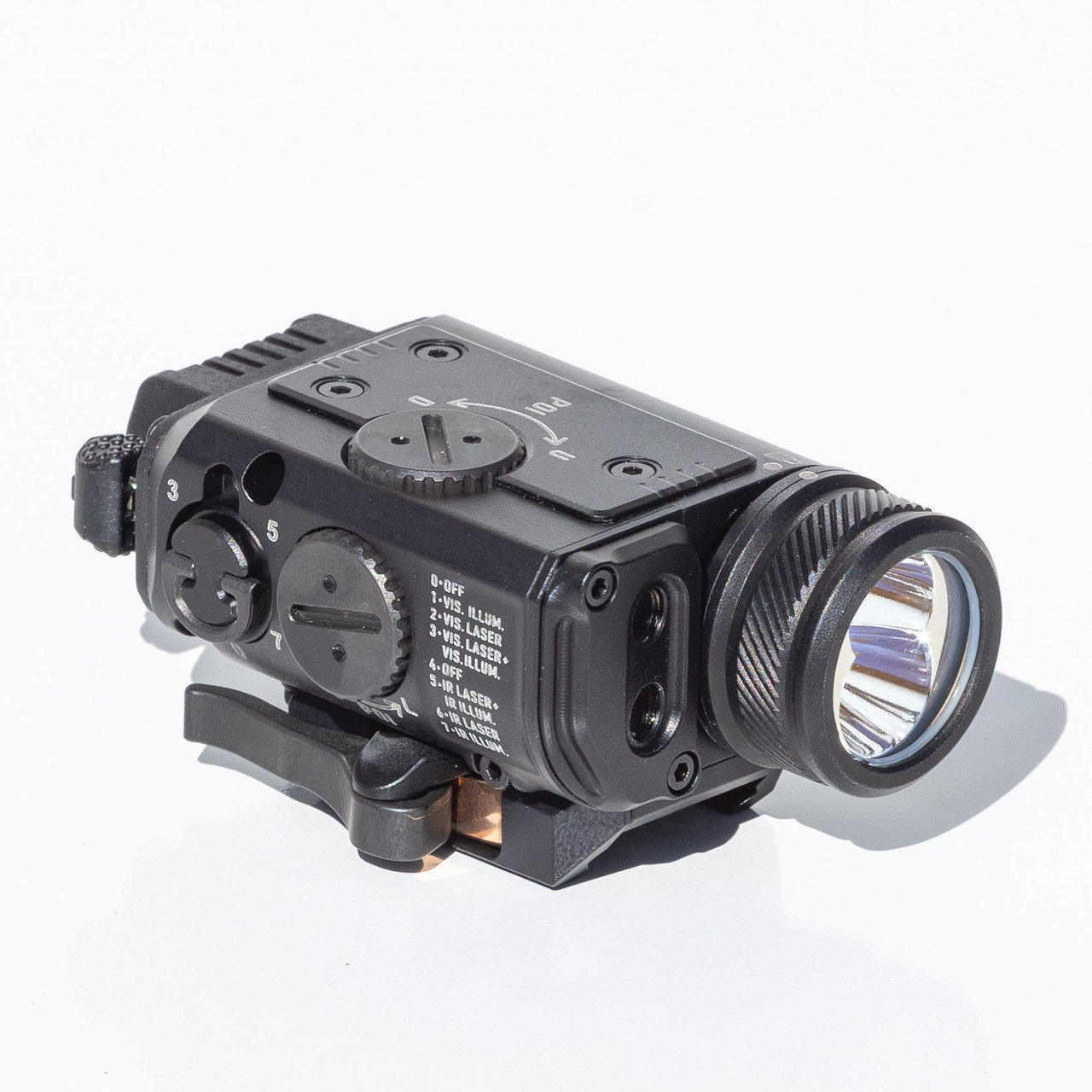
Laser

GL4 Pro

I ran both the standard and IR configurations over time. For CQB specifically, the GL4 Pro worked well for me because it’s small, the buttons are in a convenient position, and I didn’t need a remote switch just to make it usable.
Light

Lights are crucial for low light and no light scenarios. I upgraded the light once I started doing more outdoor/SUT work. That shift also influenced why I later ran the IR-focused GL4 configuration in the end phase of this setup.

Sling

Nothing fancy when it comes to the sling. Just a low-profile QD mount and a sling that does its job.

For CQB setups, the brand name matters less than simply having a sling that doesn’t fight you.

Optic Setup

EOTech on a tall riser

When I joined the training group, everyone was running EOTechs as their main optics for the larger window and fast up-close use. I followed their lead, and it absolutely worked for the role.

Why I Ran an ARD on an EOTech

This is one of the more practical lessons from this build.

I ran a Covert Arms HWS ARD (Anti-Reflection Device) because in force-on-force environments, optics and lights get hit. In my experience, the mesh style on this ARD has helped protect EOTech glass from SIM impacts enough times that it justified the setup for me.

I’m not saying it makes an optic indestructible. I am saying that if you’ve ever watched an expensive optic get fragged by training munitions, you start caring about this stuff.

The Magnifier

Flip-to-center magnifier

I had it because “what if I need distance?”

In practice, I rarely needed a magnifier during CQB work. It added weight and clunk. If I rebuilt this with the same concept, I’d probably keep a magnifier in a pouch on my kit for quick QD use instead of running it full-time on the gun.

The Lower

I’m not going to over-romanticize lower parts because most of it is personal preference, but here’s what mattered:

  • HRF Concepts magwell — simple quality-of-life improvement for reloads.

  • BAD lever — still experimenting, but I’ve liked it so far.

  • Geissele trigger — good trigger, but I’d change the weight for this role.

  • BCM grip — I like it.

The LAW Folder

This is a purely practical choice.

I was hauling gear in a Pelican 1650 and didn’t want to break the rifle down every time. The LAW let the rifle fit the case without turning transport into a chore.

What I’d Change If I Started Over

1) I Wouldn’t Start CQB With a 14.5

Let’s be honest, a 14.5 inch works. You can maneuver with it. It’s definitely better than a 16 for this use.

But if I was day-one building a dedicated CQB rifle, I’d go shorter:

  • 11.5

  • 10.3

  • Something in that neighborhood

2) I’d Add Better Light Activation

I tried different positioning ideas, including “canted rifle activation.”

It’s functional. But it’s not optimal.

If I rebuilt this, I’d run a clean tape switch or a more deliberate button placement that supports repeatable, stress-proof activation.

3) I’d Upgrade to the Newer GL4 Pro Variant

If I was setting this up again:

  • I’d prefer the newer configuration with improved switching

  • I’d also consider shrouds to reduce the chances of an ND
    The goal is always to move the ND count toward zero.

4) I’d Add a Hand Stop / Index Point

A slick rail is fine until you’re sweating, training for hours, holding awkward positions, and your support hand starts sliding.

A simple hand stop or brake is a small add that pays big in comfort and consistency.

5) I’d Run the Magnifier Less

For most CQB contexts, I didn’t need it.

If I wanted the capability, I’d carry it instead of permanently mounting it.

6) I’d Add Extended Takedown Pins

This sounds like a tiny detail, but if you’re constantly swapping bolts for SIMs, blanks, and live-fire cycles, tool-less takedown becomes a nice quality-of-life upgrade.

7) I’d Swap the Stock

I’d go B5 SOPMOD now. Better cheek weld, better feel, and that’s what I’ve standardized on elsewhere.

8) I’d Use a Heavier Trigger

A lighter trigger is great until you’re in weird positions and accidentally split a second round when you intended one.

The Takeaways

This build exists because:

  • You train with what you have.

  • You iterate as you learn.

  • You upgrade toward what the mission actually demands.

A 14.5 isn’t the “best CQB barrel length.”
But it’s a workable option when:

  • You’re repurposing a high-quality upper you already own

  • You want something shorter than 16 without fully committing to a dedicated short gun

  • You’re balancing CQB with broader carbine use

Be sure to follow Defense Distributors on Instagram and subscribe to us on Youtube!